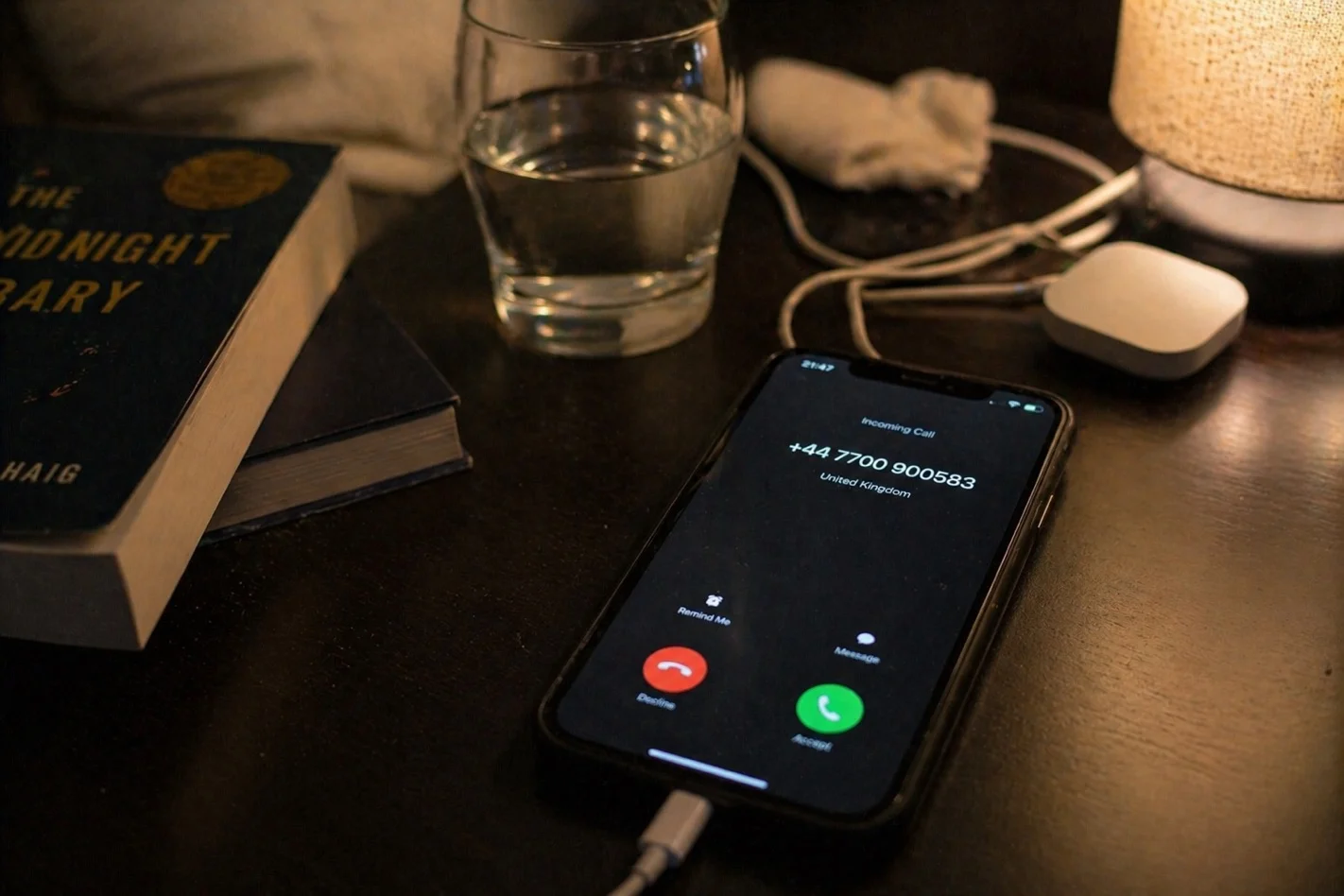
Overflow call answering is backup coverage for calls that arrive while your business is open but nobody on the usual phone route can pick up. The backup can begin after a set number of rings, when the line is busy, or during a planned rush.
For contractors, that gap often appears while the crew is on-site, driving between jobs, at lunch, already speaking with another customer, or working through a seasonal spike. A good overflow plan keeps the job moving and gives the caller a clear next step without asking the technician to stop safe work every time the phone rings.
Overflow is not the same as after hours
The two gaps need different rules.
| Coverage type | When it applies | What the caller should understand | Typical owner |
|---|---|---|---|
| Daytime overflow | The business is open, but the normal phone owner is unavailable | The team is working and the call is being captured for the right next step | Office backup, answering service, or configured AI phone assistant |
| After hours | The business is closed or the staffed shift has ended | The current hours, available call types, and real review or escalation window | On-call teammate, answering service, or configured AI phone assistant |
| Planned surge | A known busy window, weather event, promotion, or seasonal rush increases call volume | The same business rules apply even when several calls arrive close together | Additional staff or overflow service |
| Final fallback | The first and backup routes do not answer | What to leave and when the message is reviewed | Voicemail and a named review owner |
A contractor can use the same coverage service for more than one row. The greeting and workflow still need to match the reason the call was routed.
Use the separate after-hours call handling guide when the main gap is evenings, weekends, or holidays.
Find the actual overflow window
Start with two to four weeks of phone logs. Mark every call that rang while the business was open and record:
- Time and day
- Answered, abandoned, voicemail, or callback outcome
- Whether the line was busy or simply unanswered
- Who was expected to answer
- How long it took the business to respond
- Whether the caller was new, existing, routine, urgent-sounding, or outside the service area
- Whether the inquiry reached a useful next step
Look for a repeatable pattern. You may discover that the problem is not “all day.” It could be the first hour of the morning, the lunch window, Friday afternoons, the first hot week of summer, or the period when the owner is driving between jobs.
That distinction matters. It lets you add coverage where the route fails instead of changing the whole phone process.
Choose the trigger before the destination
An overflow destination is only useful when the call reaches it at the right time. Write down the trigger first.
Common triggers include:
- No answer: the usual route gets a reasonable chance to pick up before the backup answers
- Busy line: the backup answers when the primary line is already in use
- Planned window: calls route differently during a known meeting, lunch, training block, or seasonal rush
- Manual switch: the owner turns coverage on before driving, beginning technical work, or taking time away
Carrier and phone-system behavior varies. Verify the current instructions for your setup and test each trigger separately. Do not assume that a rule for unanswered calls also covers busy, rejected, unreachable, or disconnected calls.
Define the first conversation
The overflow handler does not need to solve the whole job. The purpose of the first conversation is to give the right person enough information to decide the next step.
For most trade businesses, capture:
- Caller name and verified callback number
- Service address and service-area fit
- Reason for calling in the caller’s own words
- Requested timing
- New or existing customer status
- Caller-reported urgency or warning signs
- Property, access, gate, tenant, parking, or pet notes
- The route followed and the next step actually promised
Then add trade-specific questions. Use Clara’s printable plumbing, HVAC, or electrical worksheet as a starting point.
Keep diagnosis, safety decisions, pricing, and arrival-time promises with qualified and authorized people. A clean record of what the caller reported is more useful than a confident guess.
Separate routine calls from exceptions
Write three routes before launch:
Routine review
Use this for estimate requests, standard service inquiries, scheduling questions, and other calls that can wait for the normal owner. State a response window only if the team can meet it.
Approved escalation
Define the call types your business has approved for an immediate handoff. Name the primary person, backup person, retry interval, and final fallback. The handler should report caller-stated facts without diagnosing the issue or declaring a situation safe.
Document those rules in the printable emergency call escalation plan so the daytime and after-hours routes use the same approved language.
Needs a person
Define what happens when the request is unclear, sensitive, outside the script, or requires human judgment. A safe handoff is the correct result. The handler should not improvise a policy just to keep the conversation moving.
Decide who or what answers
| Option | Useful when | Main limitation | Test before launch |
|---|---|---|---|
| Teammate or office backup | Call volume is predictable and a trained person is available | Coverage can fail when the backup is also busy | Ownership, backup, and message acknowledgment |
| Live answering service | Calls regularly need human judgment or transfers | Training, consistency, and billing vary | Hard calls, transfer behavior, billing units, and quality review |
| AI phone assistant | Intake follows repeatable business rules | It should stay inside configured questions and boundaries | Caller details, summaries, escalation, unclear calls, and fallback |
| Voicemail | A final technical fallback is still needed | The caller chooses what information to leave | Greeting, notification, review owner, and real response window |
Clara is an AI phone assistant for contractors and trades that can answer routed business calls, ask the questions you configure, capture caller details, and send a summary. Your team remains responsible for trade judgment, exceptions, current availability, and follow-up.
Build the handoff your crew will use
Send every overflow call to one place the team already checks. A useful handoff includes:
- A one-sentence summary
- Caller name, verified number, and service address
- Reported job or issue and requested timing
- Customer and service-area status
- Caller-reported urgency cues
- Access notes
- The route followed
- Every expectation given to the caller
Assign one owner for calls that need prompt review and another for the routine queue. Set a backup if the first owner does not acknowledge an approved escalation. Capturing a call without assigning follow-up simply moves the missed call into a different inbox.
Test six calls before launch
Run these tests through the real business number:
- A normal call that the primary owner answers
- An unanswered call that should reach overflow
- A call while the primary line is busy
- A routine estimate request
- An urgent-sounding call that matches an approved escalation rule
- An unclear request or failed transfer that needs the fallback
Check the greeting, timing, questions, boundaries, message delivery, escalation, and caller expectation. Confirm that the normal phone route still works after the test.
Repeat the tests when business hours, phone providers, staff, service areas, intake questions, on-call contacts, or connected systems change.
Measure whether the plan is working
Review the following each week during the first month:
- Calls sent to overflow
- Calls with complete name, number, address, and reason
- Routine calls reviewed within the stated window
- Escalations delivered and acknowledged
- Calls that reached voicemail after overflow
- Duplicate records or failed transfers
- Promises that did not match actual availability
- Call types the workflow could not handle safely
The goal is not to force every conversation into the same script. It is to find where the route, question, boundary, or handoff needs to change.
Use the lead response time guide to calculate the median, 90th percentile, and percentage within target for phone calls and every other lead channel. Keep automated acknowledgment separate from a meaningful business response.
A copyable overflow call plan
During [staffed hours], calls ring [primary owner or group] first. If the line is busy or unanswered after [tested threshold], the call routes to [overflow owner or service]. The handler states our business name, captures the caller’s name, verified number, address, reported request, timing, customer status, urgency cues, and access notes, then follows [routine, approved escalation, or needs-a-person route]. No diagnosis, safety decision, price, appointment, or arrival time is promised outside approved rules. [Named owner] reviews routine calls by [real time], and [primary then backup] owns approved escalations.
Replace every bracket with a real person, rule, or time, then test it through the real number.
Methodology and review
This guide was reviewed August 22, 2026 against Clara’s governed US call-intake model and a live opportunity cycle using finalized Google Search Console data plus recent X, Perplexity, Parallel, and Firecrawl research. The research found established third-party language around busy-line, no-answer, planned-surge, and after-hours coverage, while Clara’s GSC data showed no established overflow-query demand yet. We therefore published a distinct educational guide rather than another transactional landing page.
Market-language sources reviewed included Mecha’s contractor overflow page, ReceptionHQ’s overflow service page, and Alliance Virtual Offices’ contractor answering guide. These are third-party commercial sources used to understand category language, not evidence for Clara’s capabilities or a recommendation of those services.
The workflow is an operating framework, not a guarantee that every caller will wait, book, or become a customer. Phone-provider instructions, staffing, service availability, and local safety requirements can change, so verify them before implementation.