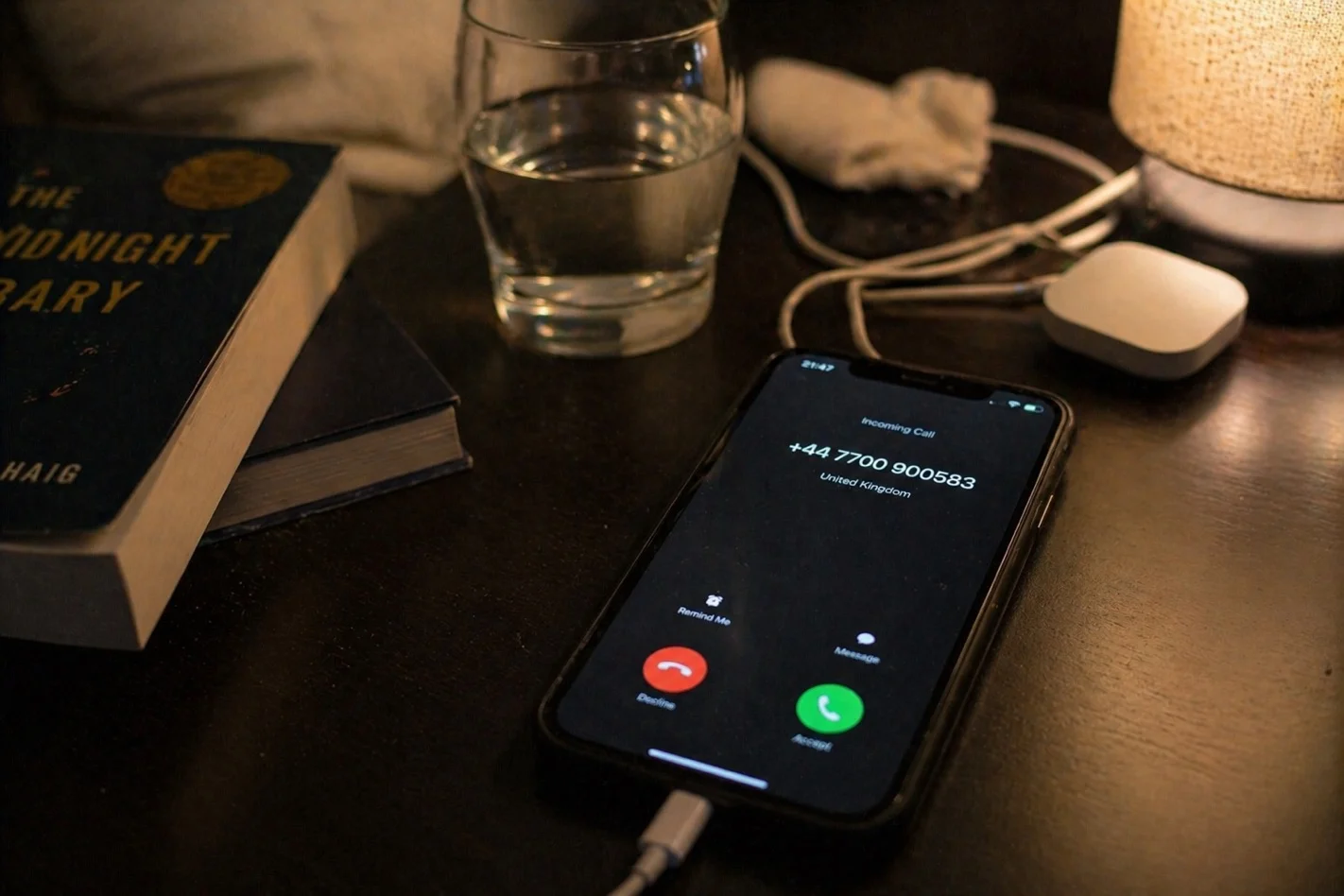
After-hours call handling is the process your contracting business follows when a customer calls outside staffed hours. A useful process answers five questions: who picks up, what details are captured, which calls are escalated, what the caller is told, and who owns the next step.
You do not need to work all night to have a clear after-hours process. You do need written rules that still work when you are off the job, having dinner, or asleep.
Use the free after-hours call handling checklist to write and test your own version.
Start with the hours you actually need to cover
“After hours” is not one universal window. For one contractor it starts at 5pm. For another it covers the lunch rush, evenings, weekends, and any time the whole crew is driving or on-site.
Review four weeks of phone logs and mark:
- Calls received before opening, after closing, and on weekends
- Calls missed while the business was technically open
- Repeat calls from the same number
- Messages that reached the wrong person or sat until the next day
- Inquiries that needed a routine callback versus an approved on-call escalation
This gives you a coverage map based on your business. It also stops you from paying for a broad service when the real gap is only two hours each evening.
Define the job of the first conversation
The first conversation does not need to diagnose the work or close every job. Its job is to leave the right person with enough context to make the next decision.
For most skilled-trade businesses, that means capturing:
- Caller name and verified callback number
- Service address and service-area fit
- Reason for calling in the caller’s own words
- When the issue or request began
- New or existing customer status
- Caller-reported urgency or warning signs
- Access, tenant, property manager, gate, pet, or parking notes
- Requested timing and the next step actually promised
Trade-specific questions come after those basics. A plumber may ask whether water is still visible. An HVAC company may record the system and indoor conditions the caller reports. An electrician may capture the affected area and reported warning signs without telling the caller to open, touch, test, or reset anything.
Use the plumbing, HVAC, or electrical intake checklist when you need a trade-specific version.
Separate urgency capture from diagnosis
An after-hours handler can record urgency cues without deciding what is technically wrong or whether a situation is safe.
Write two lists:
- Capture cues: the words and observations the handler should record, such as active water, loss of heating, sparks, smoke, unusual odor, visible damage, injury, or an existing customer without service
- Escalation rules: the call types your qualified reviewer has approved for an immediate handoff, including the named primary contact, backup contact, retry rule, and final fallback
Use the printable emergency call escalation plan to write the coverage owner, caller-reported cues, approved routes, acknowledgment rules, and fallback in one place.
Do not turn a keyword list into a diagnosis. “Caller reports smoke near the panel” is a useful fact. “The panel is dangerous” is a technical conclusion the handler is not qualified to make.
If your business has safety-critical call types, have a qualified reviewer approve the exact handling language and update it when your services or local requirements change.
Choose a coverage layer
| Coverage layer | Useful when | Main limitation | Test before launch |
|---|---|---|---|
| On-call teammate | The business already has a staffed rotation | Breaks when ownership or backup is unclear | Schedule, backup, and message acknowledgment |
| Voicemail | You need a final technical fallback | The caller chooses what information to leave | Greeting, review owner, and real response window |
| Missed-call text-back | You want an immediate recovery path after an unanswered call | The call has already been missed | Consent, reply ownership, and escalation language |
| Live answering service | Calls require human judgment or sensitive conversation | Quality, training, and pricing vary | Difficult calls, transfers, billing, and message delivery |
| AI receptionist | Intake follows repeatable business rules | Should not improvise outside configured boundaries | Questions, promises, summaries, escalation, and fallback |
These layers can work together. Your team might answer first during staffed hours, forward unanswered and after-hours calls to configured coverage, send a follow-up text, and keep voicemail as the final fallback.
When calls are routed to Clara, Clara can answer and capture details using the business information, intake questions, and handling rules you configure. Clara should not invent live availability, diagnose trade problems, or promise a price or appointment outside those rules.
Write the exact caller expectation
A caller needs to know three things:
- Which business answered
- Whether the business is currently staffed
- What will happen next
Use a real response window only if somebody owns it. “The on-call plumber will review this within 20 minutes” is useful when the rotation can support it. “Someone will get back to you soon” is vague and difficult to audit.
For routine requests, say when the office reviews messages. For calls that match an approved escalation rule, explain the handoff without promising the outcome. If there is no after-hours dispatch, say so clearly.
Build the owner handoff
Every captured call should land in one place your team already checks. The handoff should include:
- A one-sentence summary of the request
- Caller name, number, and service address
- Reported issue and timing
- Any captured urgency cues
- Customer and service-area status
- Requested timing and access notes
- The escalation route followed
- Every promise made to the caller
Assign an owner for immediate escalations and another for next-business-day review. Add a backup if the primary owner does not acknowledge the message. A perfect intake with no owner is still a missed opportunity.
Test five calls before launch
Call your own business outside staffed hours and test:
- A routine estimate request
- An urgent-sounding request that matches an approved escalation rule
- An existing customer asking about previous work
- A caller outside the service area
- An unclear request that does not fit the script
For each test, check the greeting, captured fields, boundaries, escalation, message delivery, and caller expectation. Confirm that the backup works when the primary contact does not answer.
Repeat the test whenever you change hours, service areas, on-call contacts, intake questions, pricing language, or scheduling connections.
Review the process every month
Track the process, not just the number of answered calls:
- After-hours calls received
- Calls with a complete name, number, address, and reason
- Escalations delivered and acknowledged
- Routine inquiries reviewed within the stated window
- Calls that reached the wrong route
- Promises that did not match real availability
- Call types the script could not handle safely
Use those failures to update the rule, question, or handoff. Do not expand what the handler promises just to make the conversation sound smoother.
A copyable after-hours call plan
After [closing time], calls route to [coverage owner or service]. The handler states our business name and staffed hours, then captures the caller’s name, verified number, address, reported issue, timing, urgency cues, customer status, and requested next step. Calls matching [approved escalation types] go to [primary owner], then [backup owner] if not acknowledged within [real interval]. No diagnosis, safety decision, price, appointment, or arrival time is promised outside approved rules. [Next-day owner] reviews all remaining inquiries by [real time].
Replace every bracket with a real person, rule, or time. Then test it.
Methodology and review
This guide was reviewed August 22, 2026 against Clara’s governed US call-intake model and a live search-opportunity cycle covering Google Search Console, Perplexity, Firecrawl, Parallel, and recent X posts. The workflow emphasizes explicit ownership, caller-reported facts, approved escalation, bounded promises, and testable handoffs. It does not provide technical, legal, medical, or safety advice.